A school is not just a building – it is a launching point from which future world-changers take flight! This is exactly the idea that carried us through the Saku Kajamaa School competition entry. How to create an environment for 230 students and staff that inspires curiosity, encourages discovery, and combines nature and learning into a unified experience?
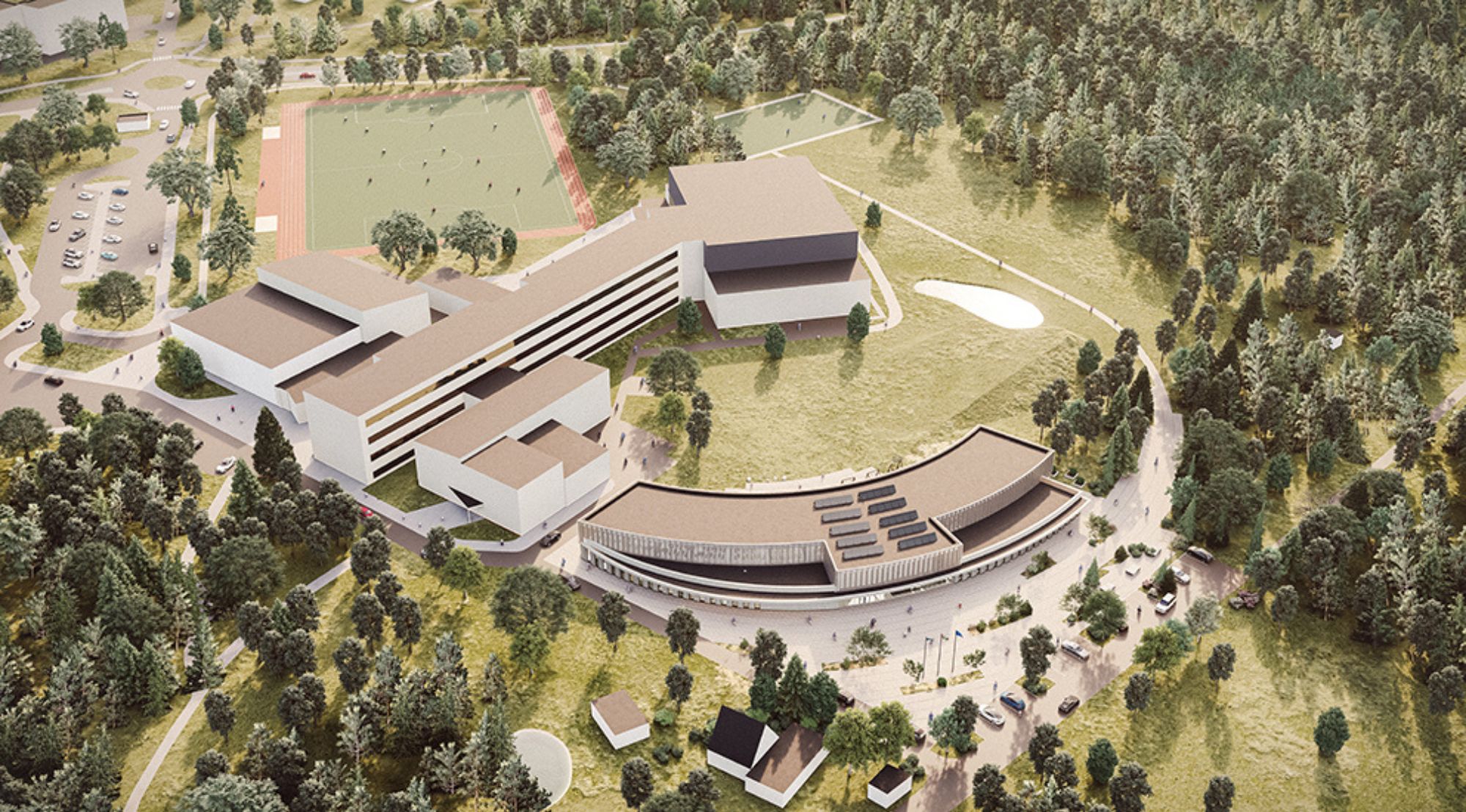
The Saku education quarter is located at a logistical hub – a highway, train station, and bus stops on one side, and quiet residential streets on the other. The plot itself is full of possibilities, but also contradictions. How to create a safe learning environment in a place where traffic and silence constantly meet? How to make a 2,500 m² school building that does not dominate, but organically blends into the existing education quarter?
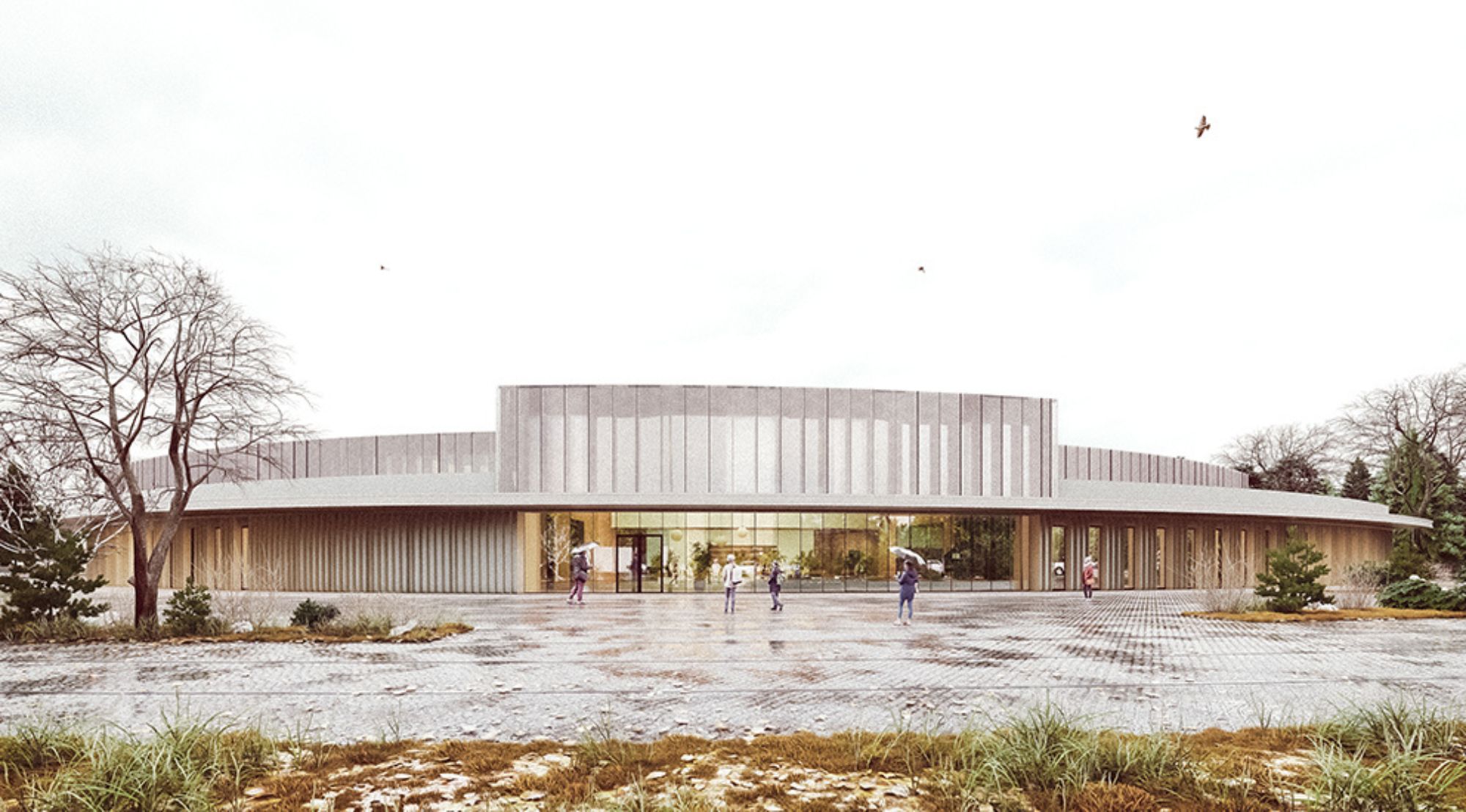
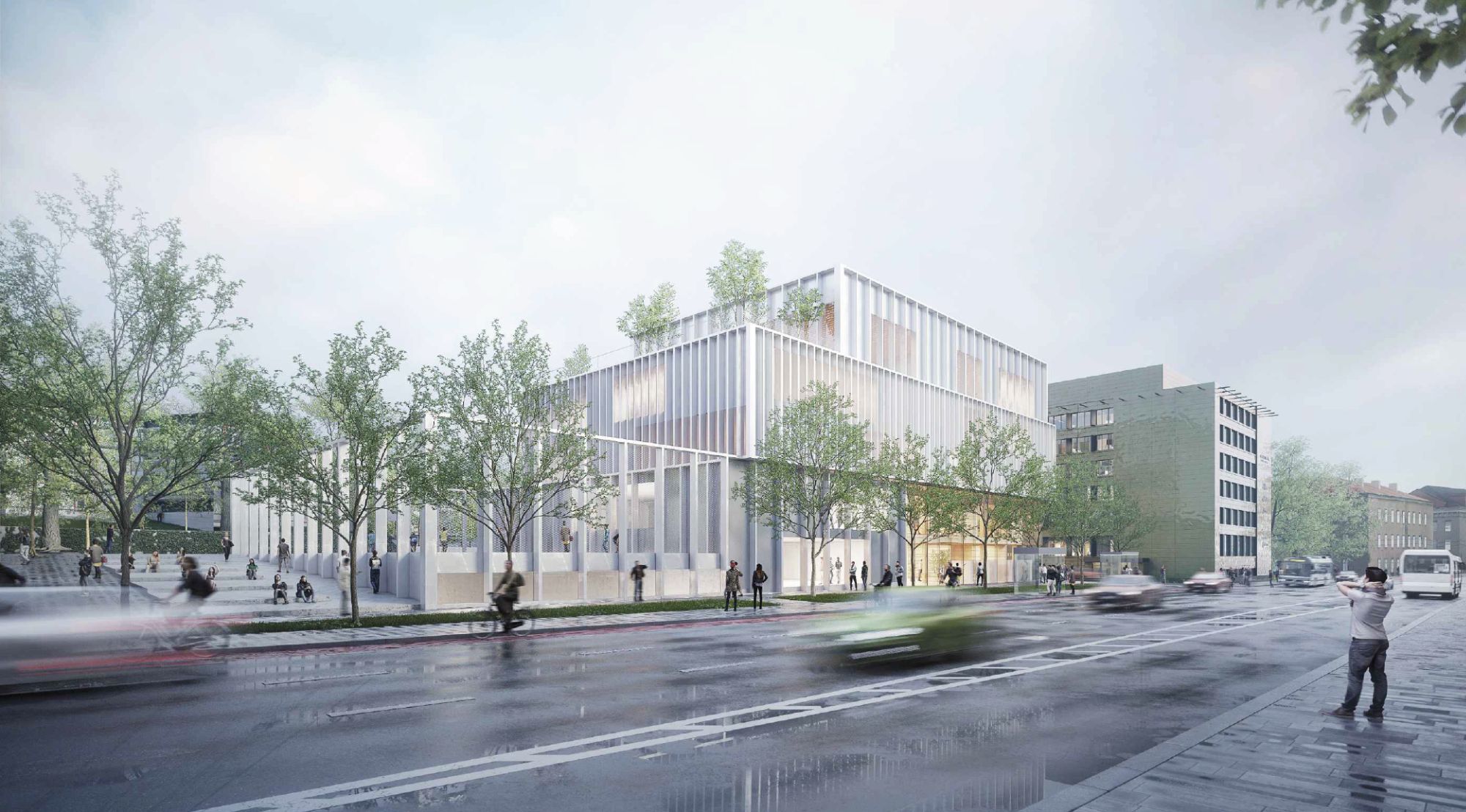
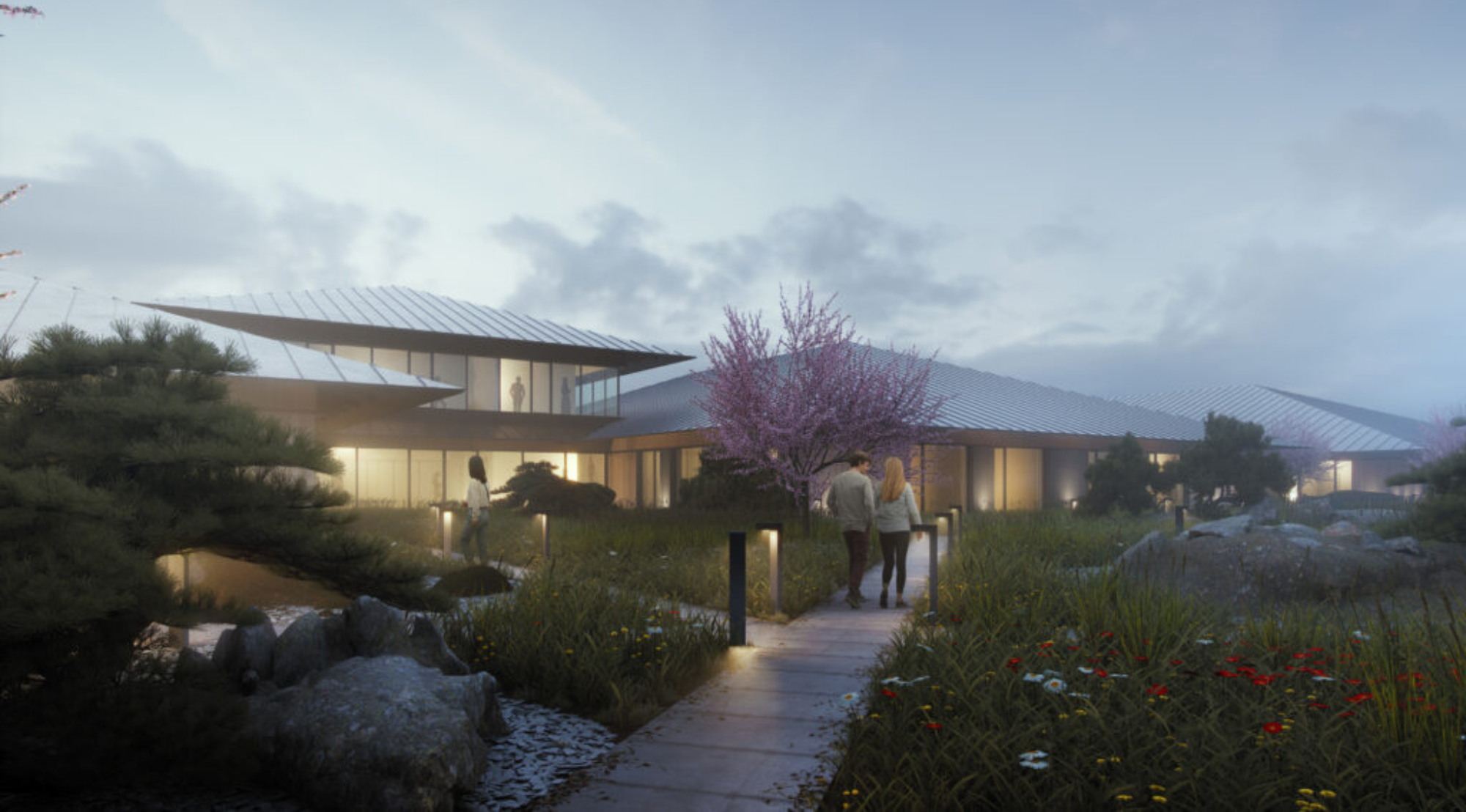
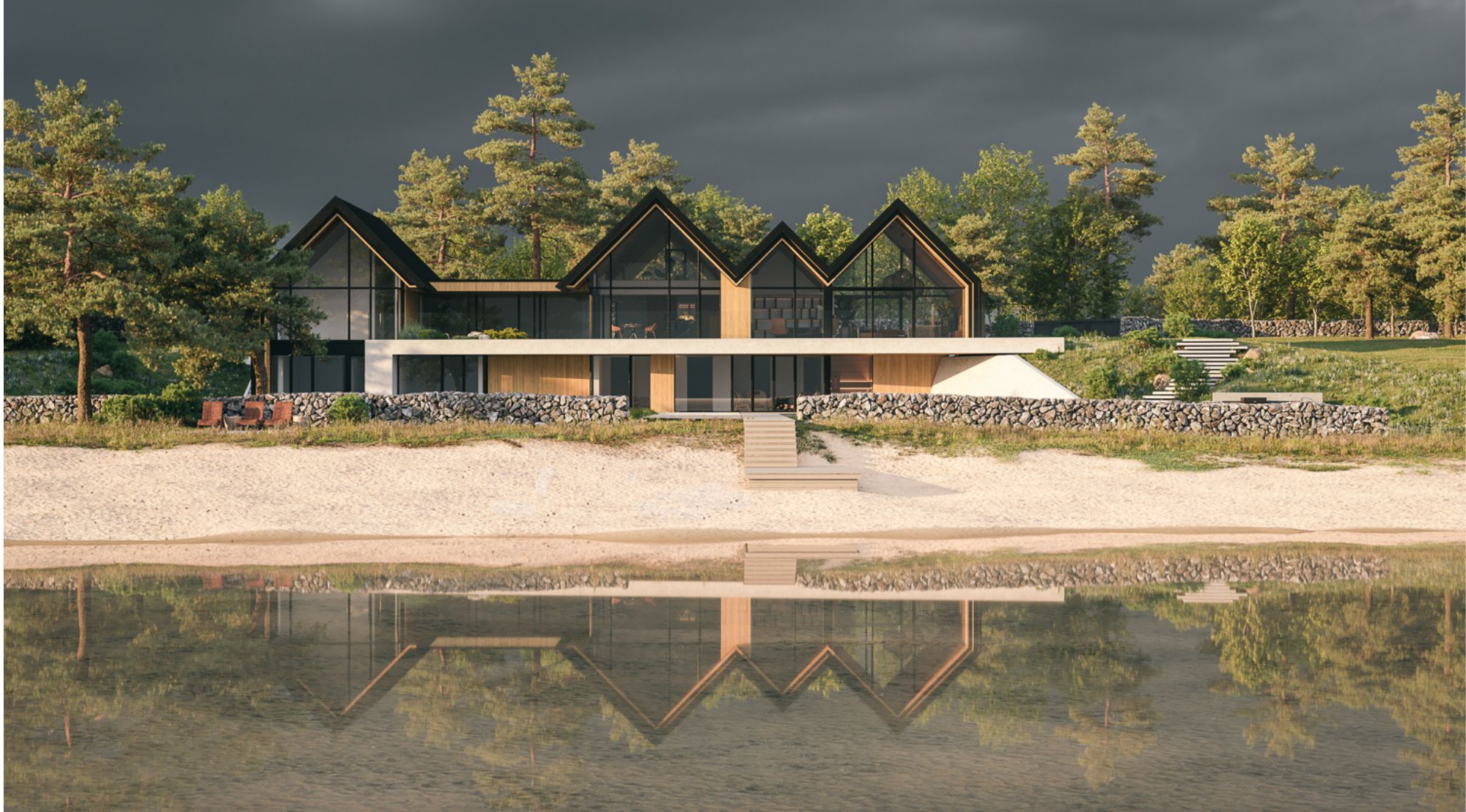
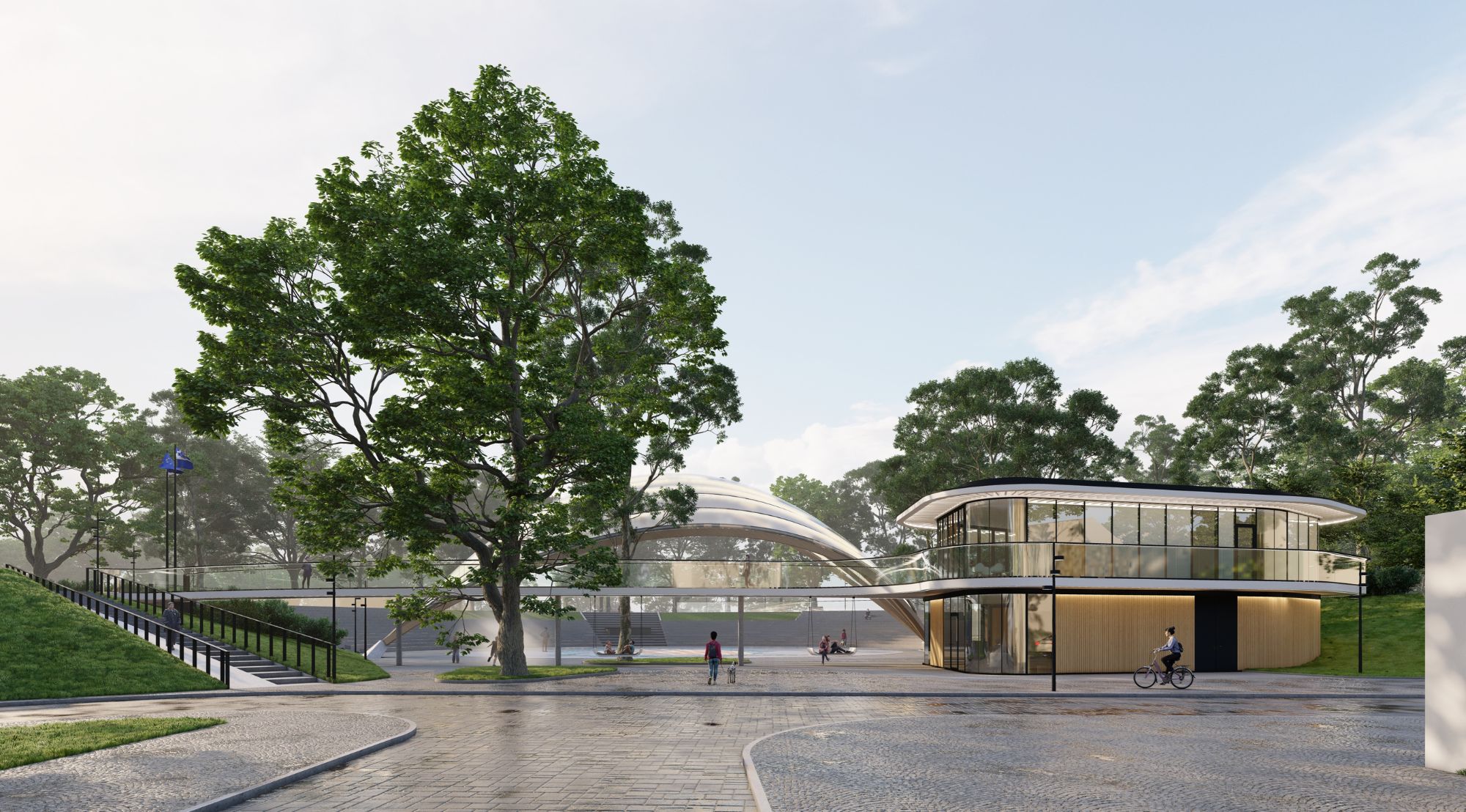
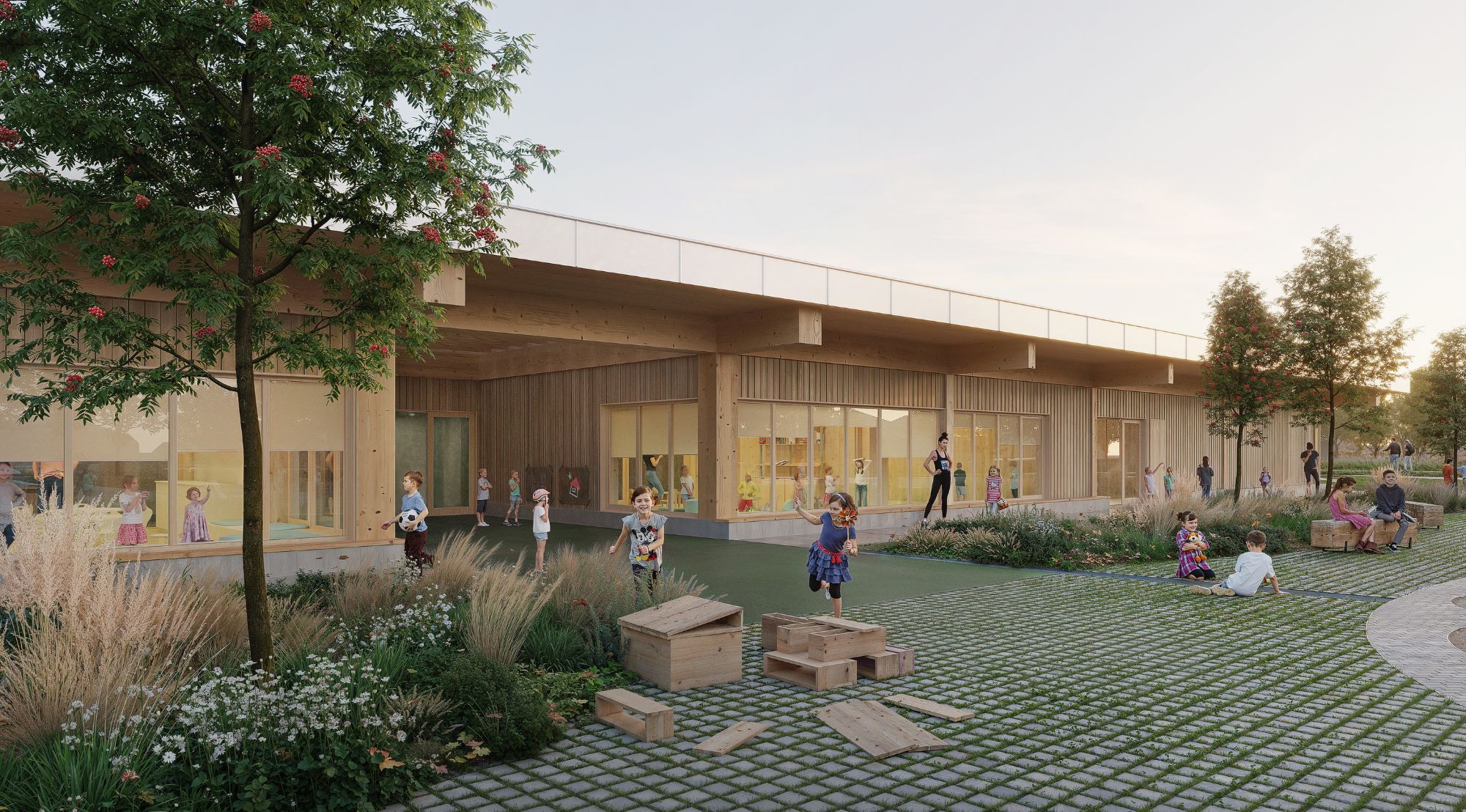
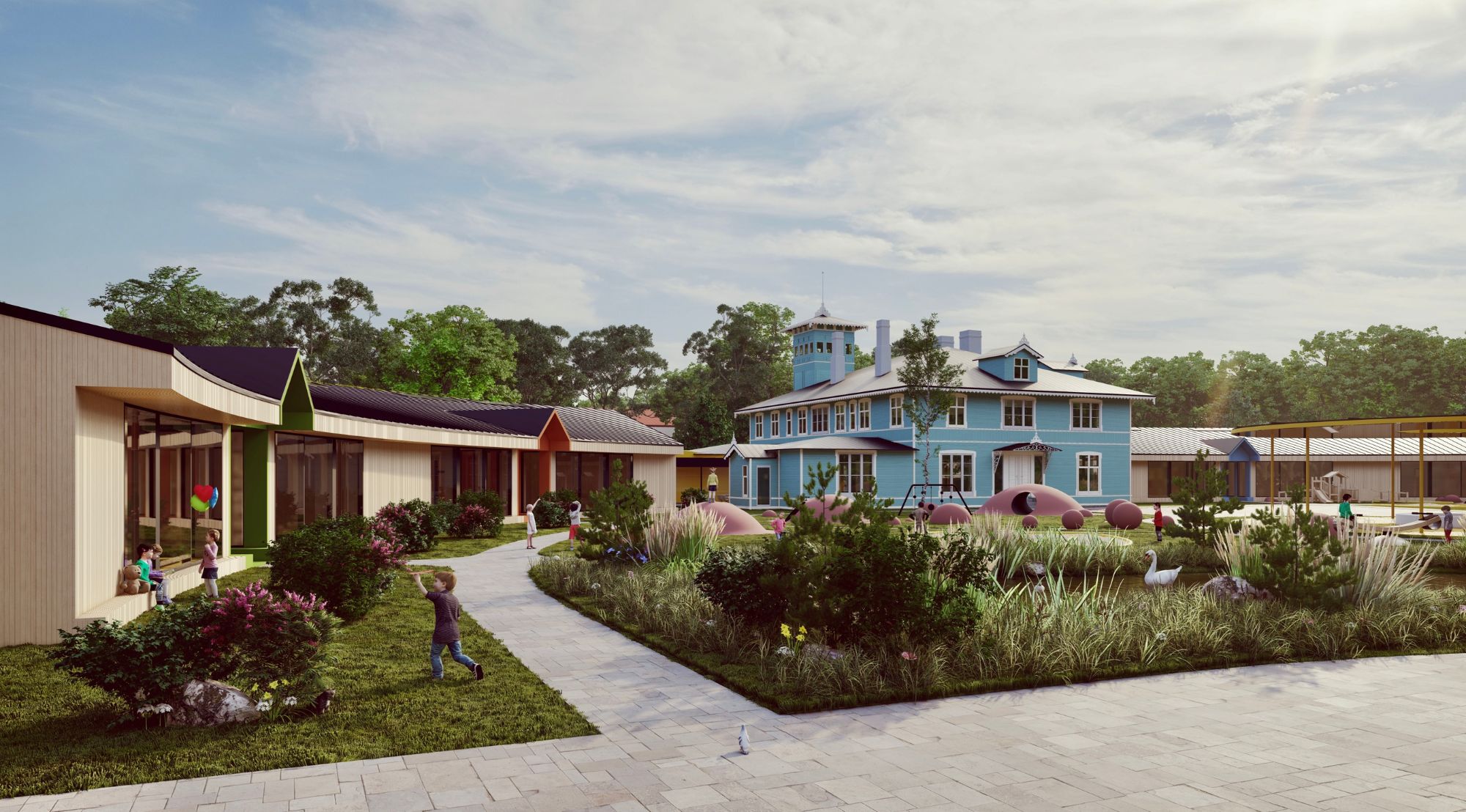
The approach was clear: we will create a building that is not the end or accent of the quarter, but a natural continuation. The form language was born from gusts of wind – an organic, streamlined building that takes students under its wing like a protective, warming shell.
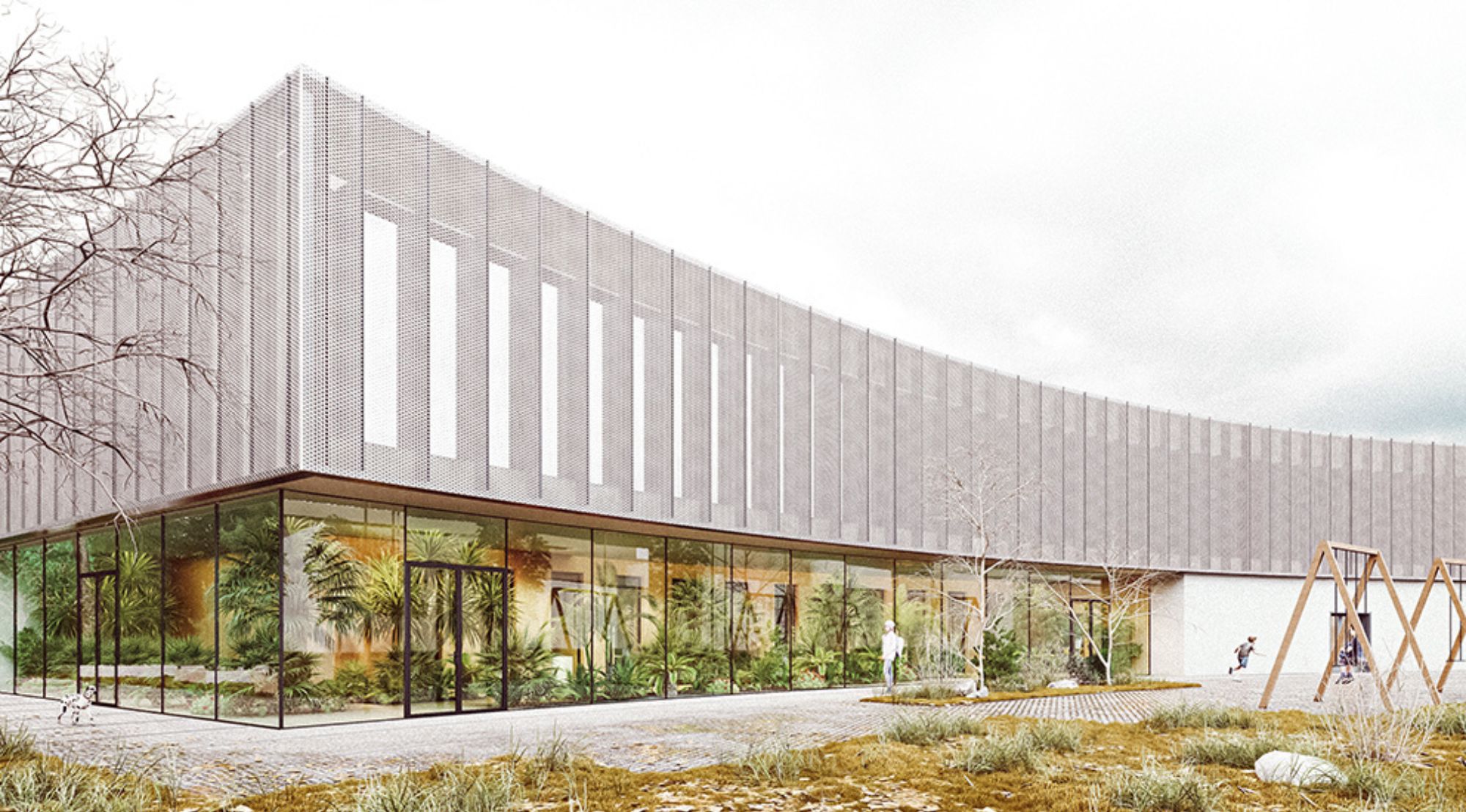
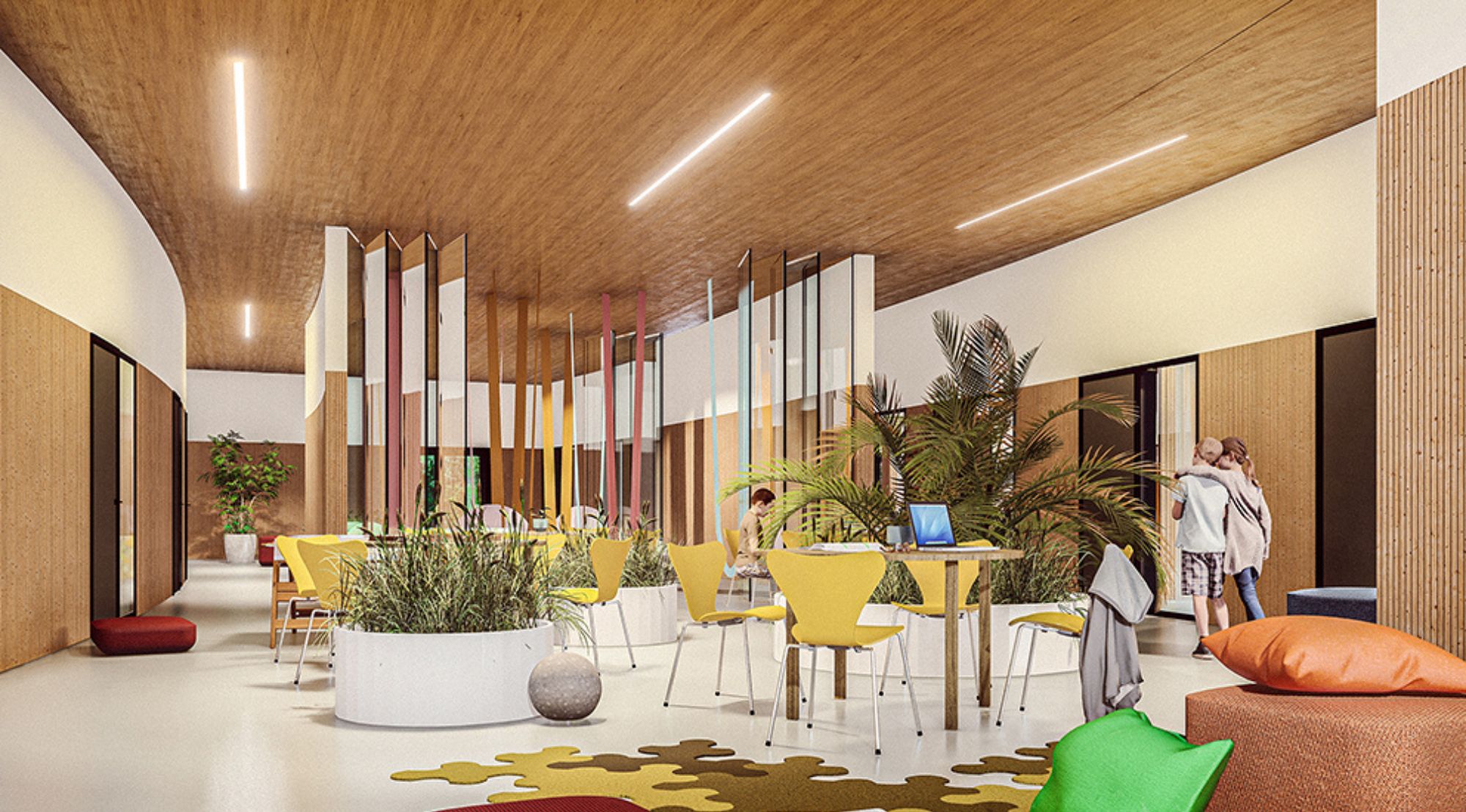
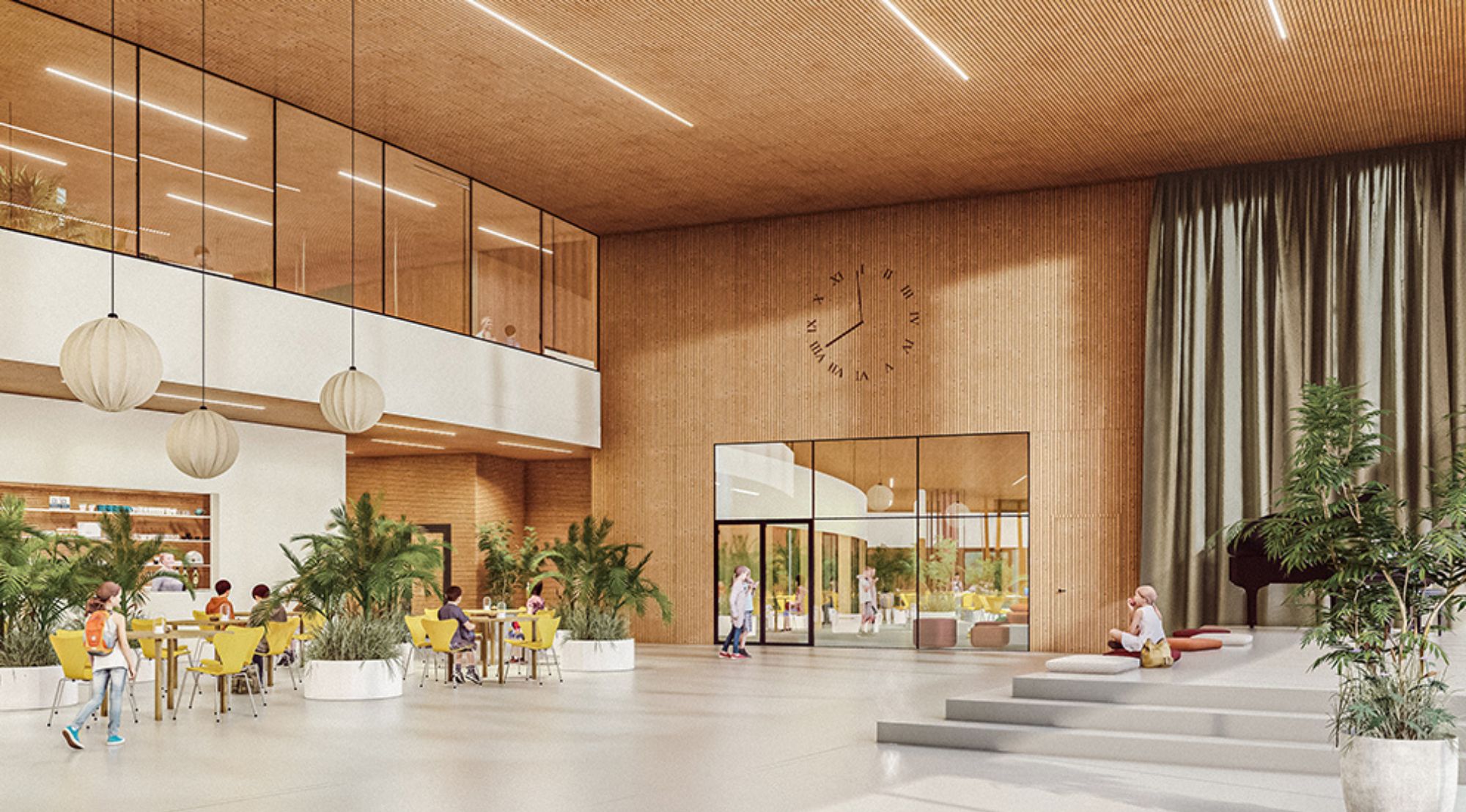
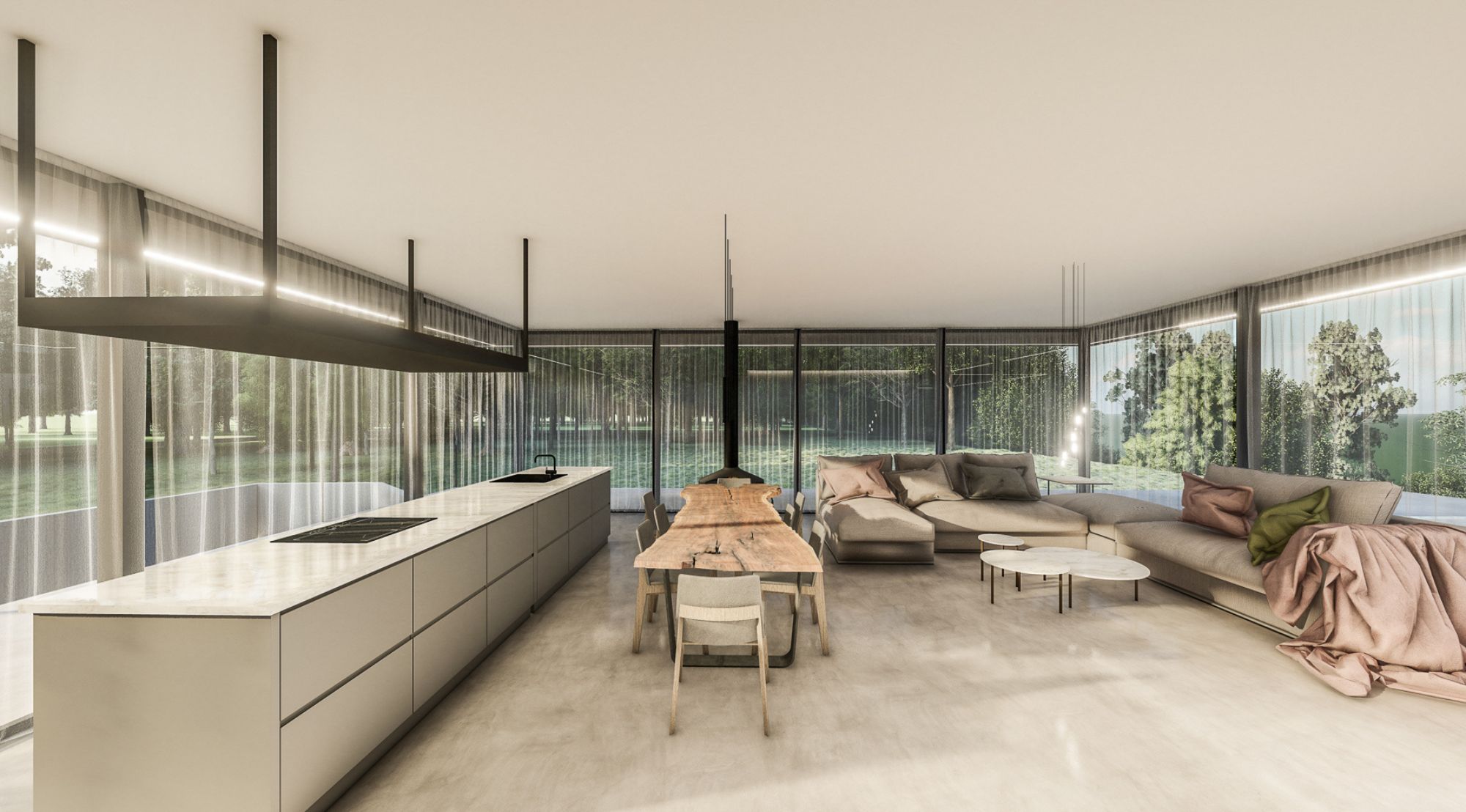
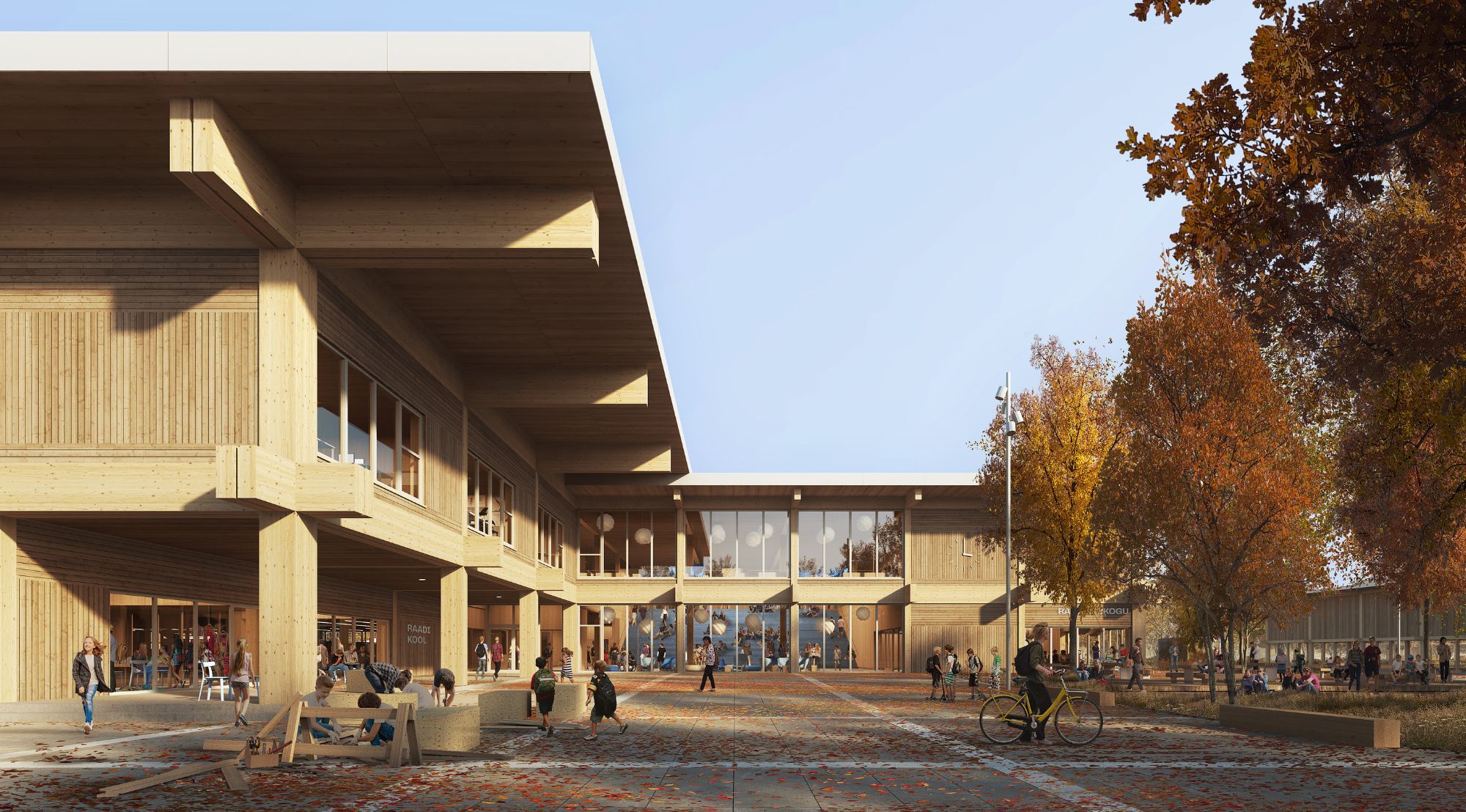
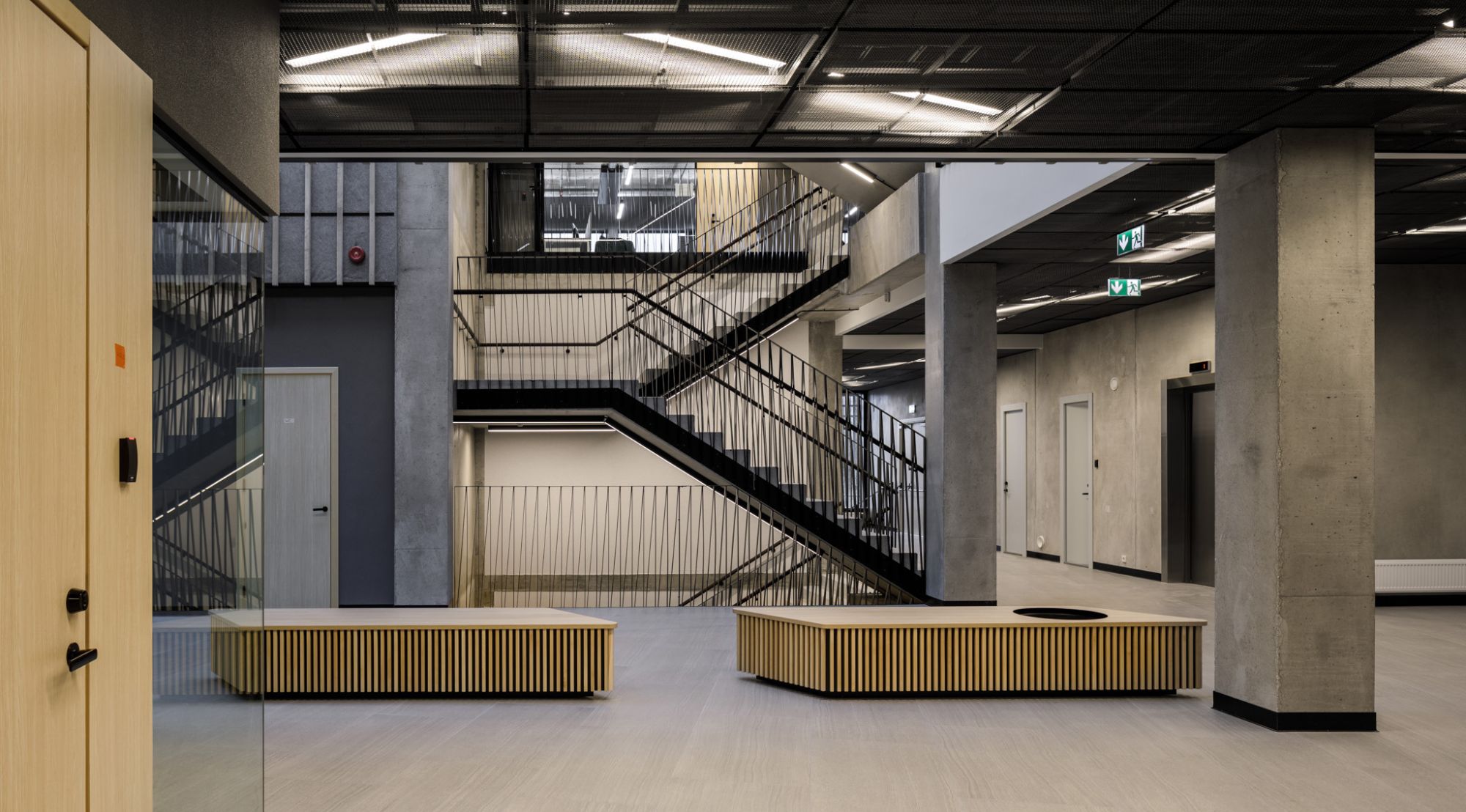
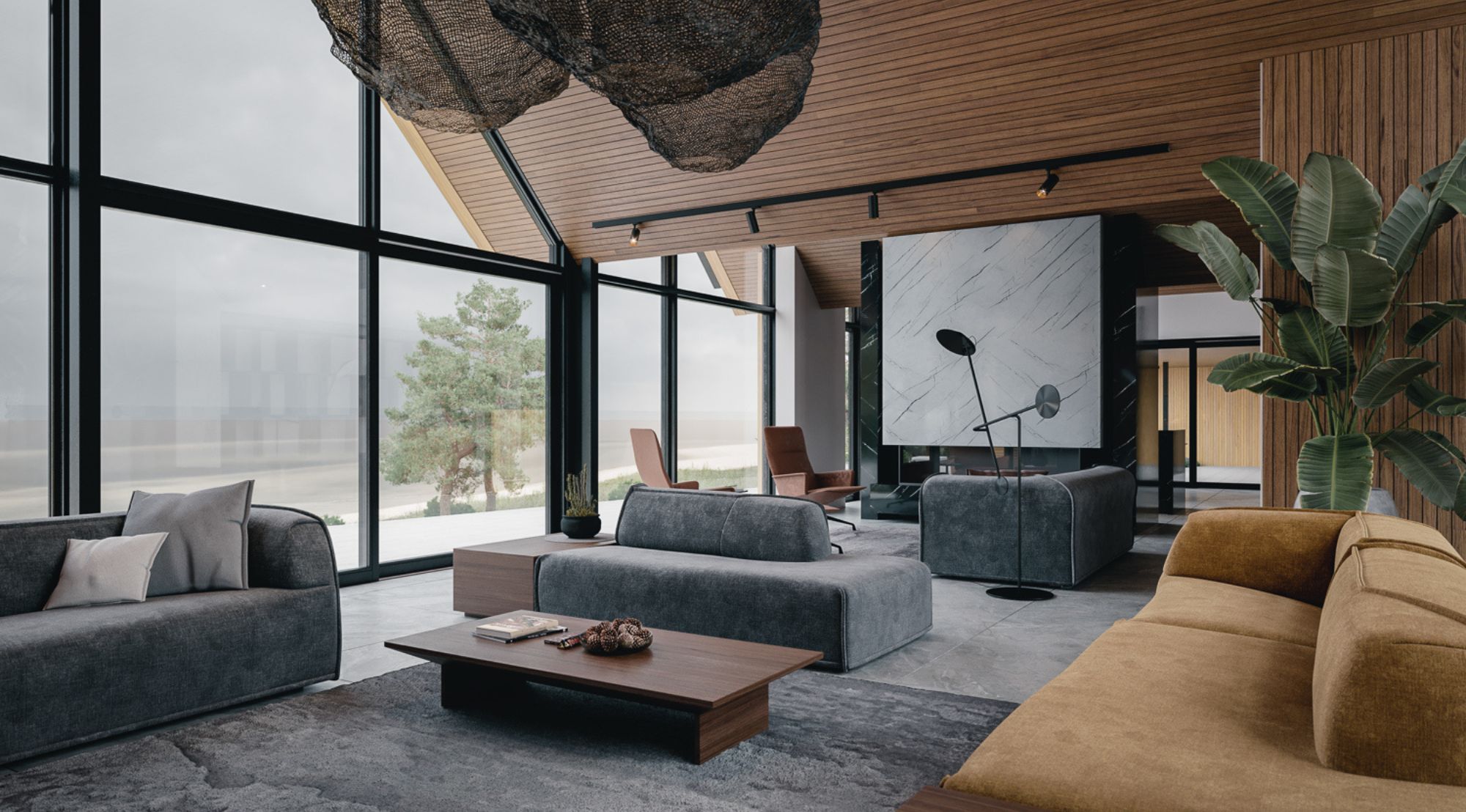
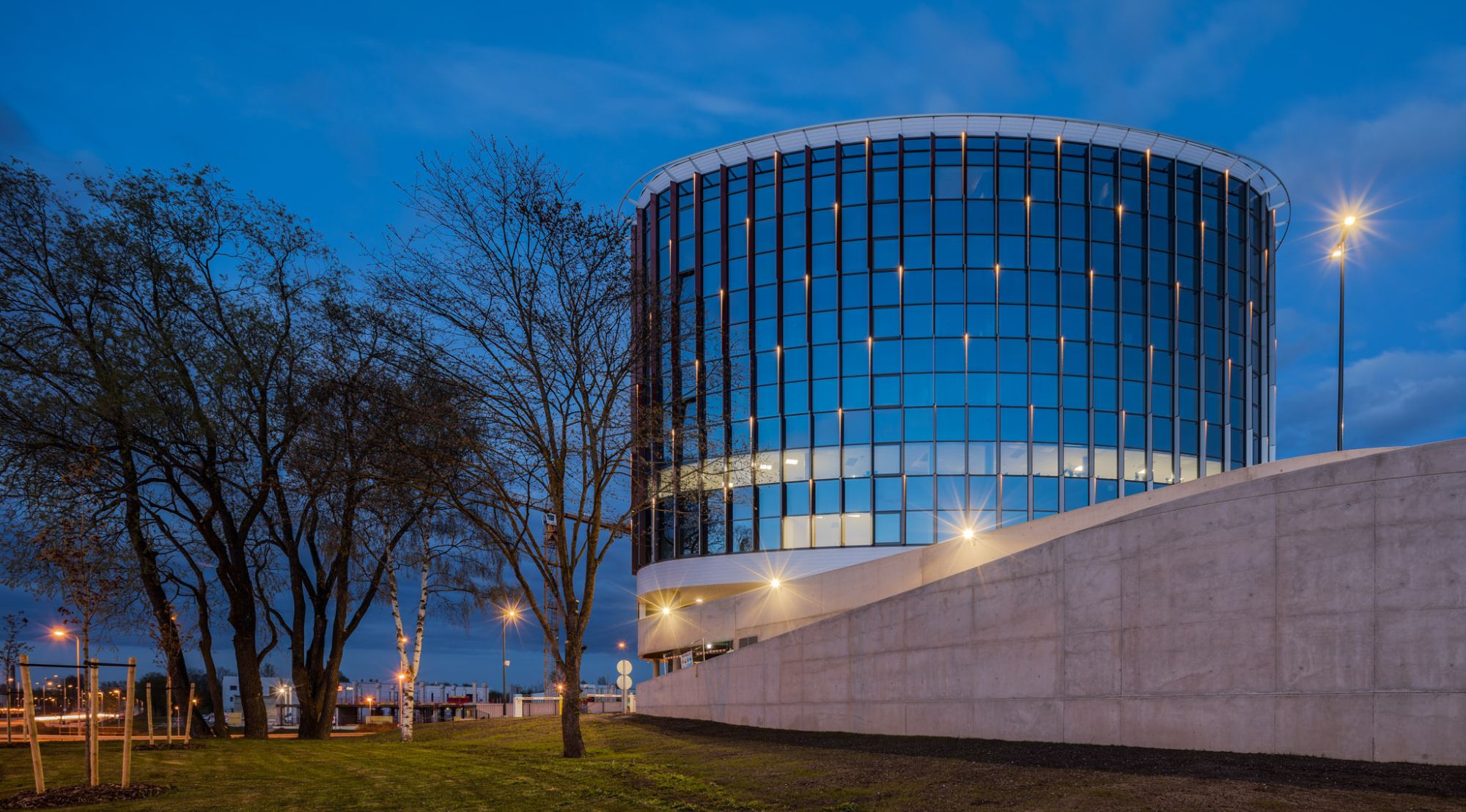
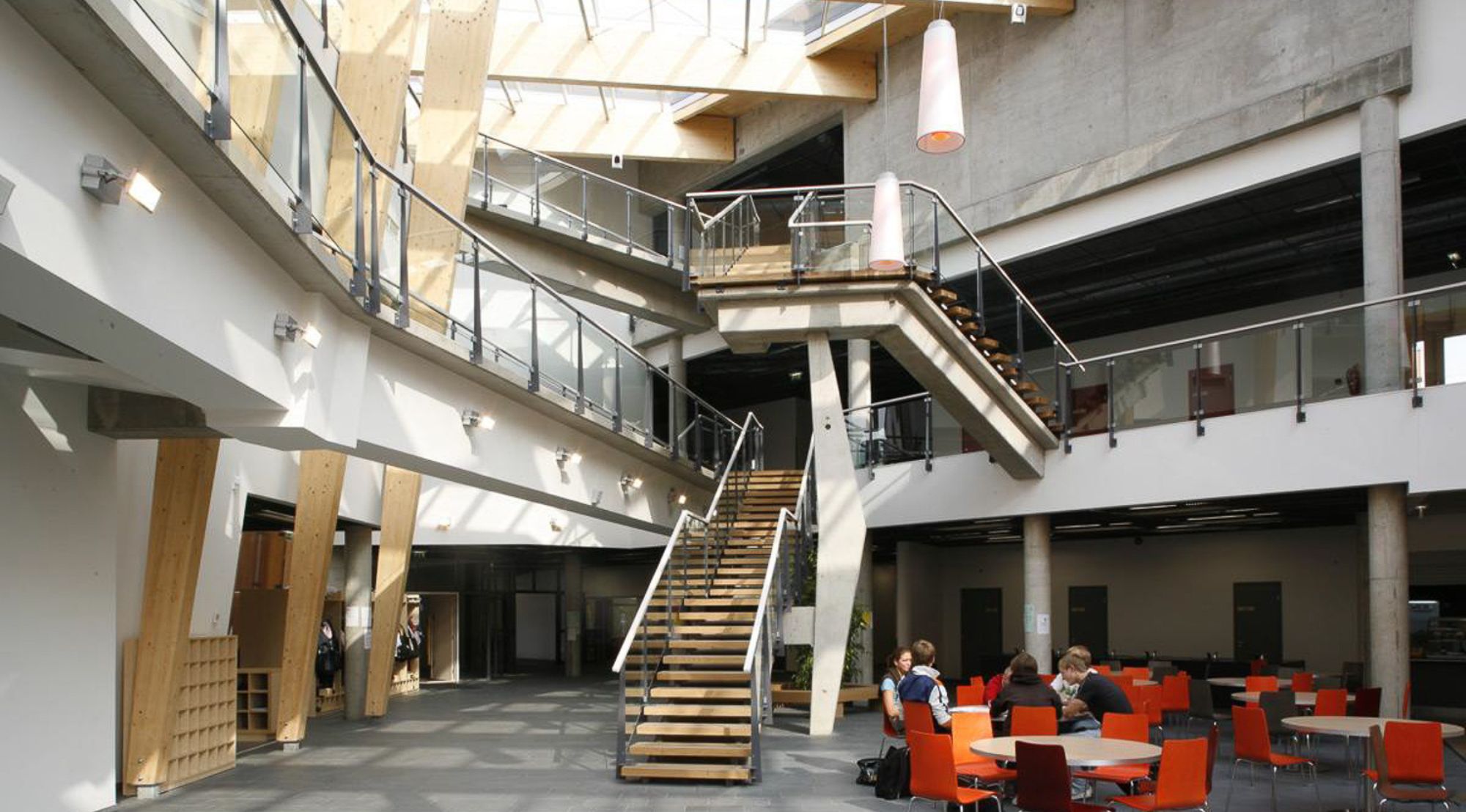
The competition entry “Wind to Wings” is not one large volume, but a system of articulated volumes. The first floor – reinforced concrete and white plaster – is a fortress on the ground. The second floor – a thin fabric of aluminum panels – is flight, light as clouds and wind. This powerful volumetric articulation with the setbacks of the second floor creates the possibility of outdoor terraces, where lessons continue directly open to the sun. The atrium, designed as the heart of the building, runs through two floors – a cross-use space that simultaneously functions as a dining hall, a hall and a place to spend free time. The winter garden, which opens through a large glass facade, connects the internal and external learning environment. Plant boxes, water elements, shaded benches – everything is designed so that the time spent at school is not just about completing the lesson plan, but breathing with nature.
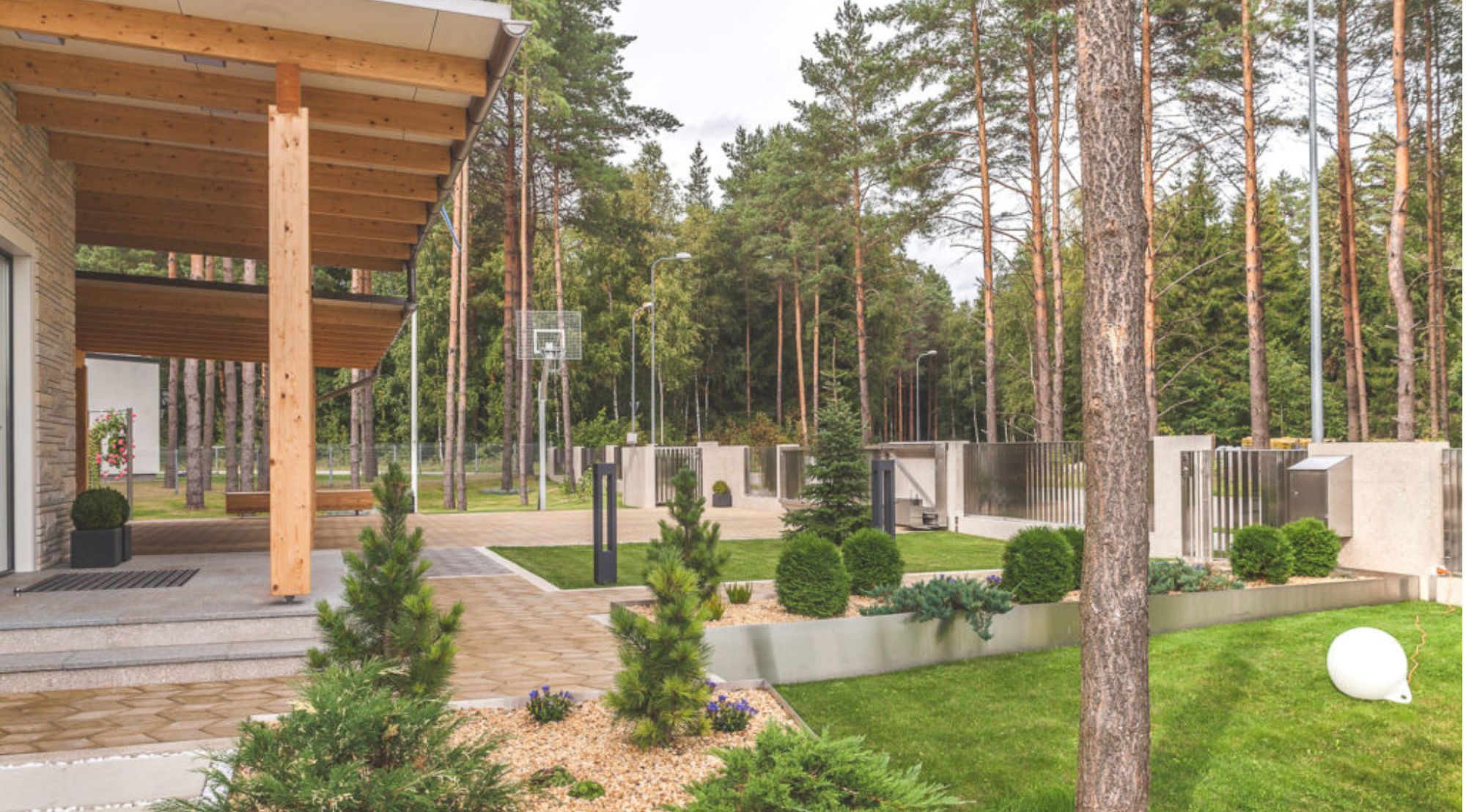
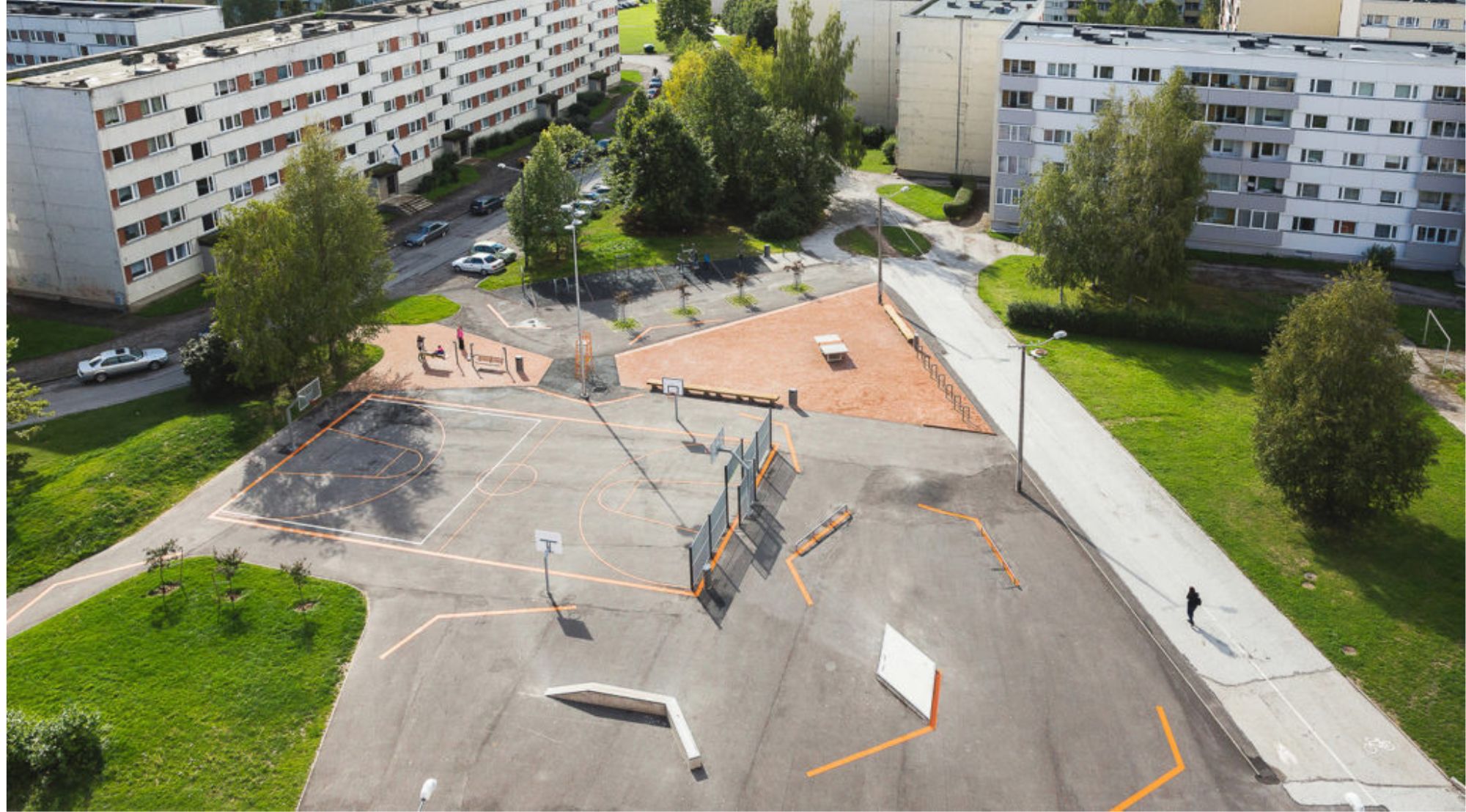
The focus of Kajamaa School's competition entry was on the person – the child, the teacher, the parent, the community. The area around the building becomes a public space that invites the community in even outside of school hours. Circular traffic around the residential area, drop-off areas, covered bicycle parking, outdoor gym, balance track, sledding hill – all of these are not just functional solutions, but an invitation to actively move, discover, be together.